

You are not alone
If you're reading this because things at home don't feel safe — you are not alone, and this is not your fault.
Whatever is happening — shouting, control, fear, being isolated from family or friends, being hurt, being watched, being made to feel small — it has a name, and it is not something you have to carry by yourself.
We know that for many of the people we work with, asking for help isn't simple. Maybe you don't have the words in English.

Help and support are here for you
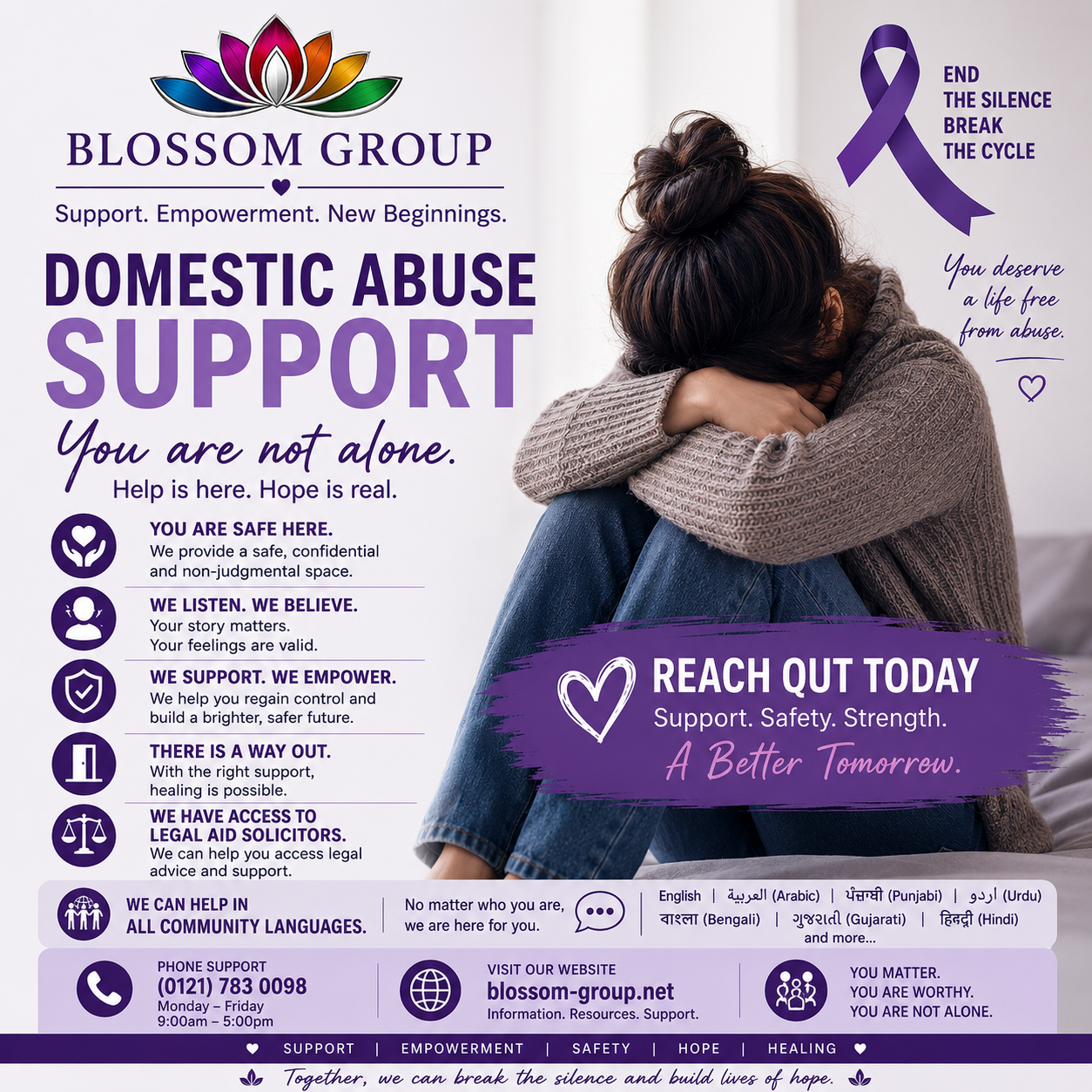
BLOSSOM GROUP believes that everyone deserves to feel safe and respected. We offer confidential support and guidance for individuals experiencing domestic violence in East London. Our services are designed to empower you to make informed choices and find a path to safety and freedom.
We work to understand your unique situation, offering a compassionate ear and practical steps forward. Your privacy and well-being are our top priorities.
Our commitment to your safety
We are here to listen without judgment and help you navigate challenging circumstances. Whether you need immediate assistance or simply someone to talk to, BLOSSOM GROUP offers a safe space. We believe in turning community trust into real change, ensuring that no one faces domestic violence alone in East London. Not on our watch.
All conversations are kept confidential. We are here to help you explore your options and connect you with the right resources.

Connect with us securely
If you need urgent help, please call 999. For confidential support and advice, the National Domestic Abuse Helpline is available 24/7 on 0808 2000 247. You can also reach out to us directly.
The most important thing we want you to take away from this page is that you matter, you belong, you are home. Reach out, even if it feels difficult. We are here.
Domestic Violence Support
If you are experiencing any form of domestic violence — please know you are not alone.
You are not weak. You are not to blame. And you deserve help.
At The Community Box, we understand that domestic violence is not just one thing. It can take many forms:
-
Physical abuse — hitting, pushing, harming your body
-
Emotional abuse — insults, control, intimidation, fear
-
Financial abuse — stopping you from having money or controlling what you spend
-
Coercive control — isolating you, tracking your phone, deciding who you can see
-
Verbal abuse — shouting, threats, constant criticism
-
Psychological abuse — gaslighting, confusing you, making you doubt yourself
We’ve seen it all. Many of us have lived through it.
That’s why we’ve built a safe, trusted Domestic Violence Support Unit right here at The Community Box.
Here, you can:
-
Speak to people with real lived experience — not just forms and titles
-
Get help in many languages — Dari, Farsi, Pashto, Urdu, Somali, Bengali, Polish, English, and others
-
Be supported by people who understand cultural pressures — but never use them to silence you
-
Share your story only if and when you’re ready
-
Be guided gently toward the right support — no pressure, no rushing
-
Get help with housing, benefits, legal aid, and emotional safety
-
Receive safe referrals to services you can trust — ones we know and have worked with personally
We don’t push anyone to act before they’re ready.
We don’t report anything without your consent (unless someone’s life is in immediate danger).
We will sit with you. Listen. Respect your pace.
Some people come here after years of silence. Some come after one terrifying moment. Both are valid.
We also know that anyone can experience domestic violence — women, men, non-binary people, LGBTQ+ people, people of all ages, all backgrounds, all walks of life.
No judgement here. Just care.
At The Community Box, we always say:
“You are not here for us to save you.
You are here because we walk beside you.”
You deserve:
-
Safety
-
Dignity
-
Respect
-
Freedom
-
Healing
-
Hope
So when you are ready, we are here. No pressure. No shame.
Come as you are — scared, angry, sad, confused — it’s okay.
We’ll make the tea, and we’ll listen.
You are not alone anymore.
The Door - A true story of survival and freedom Told by Babita
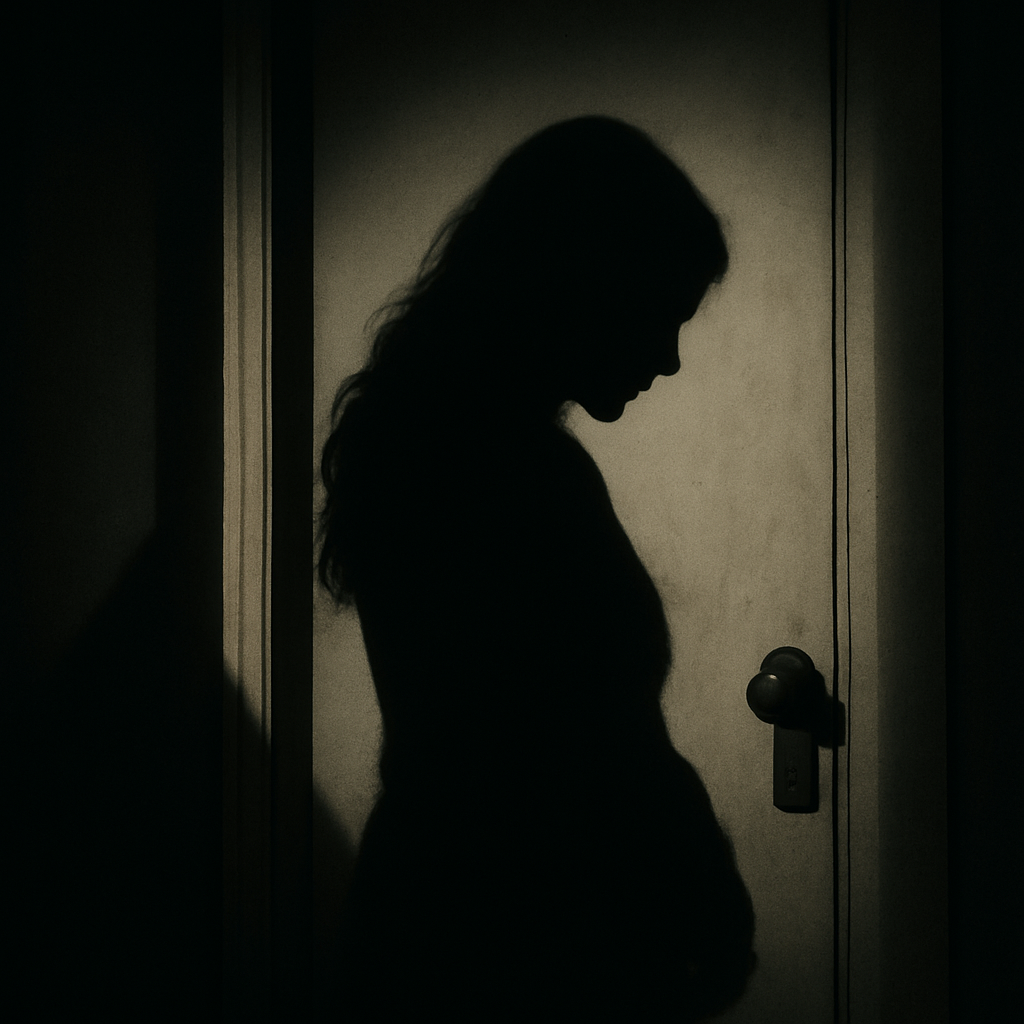
I remember staring at the door.
It was locked. Always locked.
I would sit on the cold floor, watching that door for hours, wishing—praying—that it would open.
My name is Babita. I came from India, married into a family who brought me to the UK with promises of love, respect, and a better life.
But from the moment I arrived, they made it clear:
I wasn’t a daughter-in-law.
I wasn’t even a human being.
I was their prisoner.
They locked me in a small upstairs room.
No phone. No friends. No neighbours allowed near me.
They said it was my father’s fault.
"Tumhare pita ne dahej kam diya hai," they told me.
("Your father didn’t give enough dowry.")
"Jab tak paisa nahi milega, yahi band rahegi."
("Until he pays, you stay locked up.")
They called my father back home, demanding more money, screaming at him through the phone. He cried, begged them to stop—but they kept pushing.
And me?
I sat behind that locked door, terrified.
Sometimes they hit me.
Sometimes they used the belan—the rolling pin from the kitchen.
Other times, it was a stick.
The bruises, the pain—that became normal.
One time, they beat me so badly I fainted. I was unconscious in that locked room for two days. No food. No water. No help.
I thought I was going to die there.
One day, in desperation, I ran. Barefoot, confused, I escaped through the door when no one was looking. I ran out onto the road—and nearly got hit by a car.
An elderly man stopped his car, helped me up, and took me to the local doctor’s surgery.
I couldn’t speak. My lips were shaking. My eyes were full of tears.
I sat there, silent, with no English to explain the hell I had run from.
But the social prescriber in the GP’s surgery — she didn’t ignore me.
She sat with me quietly, patiently. She didn’t rush me. She didn’t push me.
She listened.
Then she said calmly,
"I know a place that can help you. You won’t have to explain everything again right now."
She called The Community Box at Blossom Group.
That’s when I met Sahera.
She sat with me, softly speaking in Hindi and Urdu.
Her words weren’t cold or official.
Her voice didn’t sound like a "worker" or "system person."
She sounded like… a sister.
I’ll never forget her first words:
"Behen, daro mat. Tum akeli nahi ho."
("Sister, don’t be afraid. You are not alone.")
As she sat beside me, I could feel her kindness.
Her eyes were full of understanding—not pity.
Then she said,
"You need to speak with Madam Folarin. She’s our elder here. She will help you."
When I met Madam Folarin, she didn’t ask me to explain everything.
She looked me in the eye and said,
"Chiamaka—my dear—you are not the cause of this. You will not face it alone."
That day, something inside me shifted.
I wasn’t alone anymore.
With their help, I found:
-
A safe place to stay
-
Legal advice
-
Immigration support
-
Benefits and help for my children
-
Step-by-step care with no pressure, no shame
Madam Folarin didn’t just “refer” me somewhere.
She walked with me. She sat with me for tea. She called me “my dear” and treated me like her own.
Today, I am free.
My children are safe.
I can cook what I want, wear what I want, and I am no longer afraid of locked doors.
When I remember that door—the one I stared at for months—I think of the other door:
The door of Blossom.
The door that opened my life.
I now tell every woman who feels trapped:
"That locked door is not the end of your story.
There is always another door waiting—
And behind it, people like Sahera and Madam Folarin are ready to lift you up, not push you down."
Chiamaka’s Story: "Everywhere I Turned, It Was Fear"
My name is Chiamaka. I am from southeast Nigeria.
When I first married my husband, I thought it was a blessing.
He brought me to the UK, saying, “Don’t worry, I will take care of you. You will be fine.”
But inside that house, his words became different.
It started with the way I dressed:
"Look at you, Chiamaka. Who are you dressing for? See that man looking at you! You want to disgrace me?"
He would say I looked cheap. Ugly. Stupid.
"Don’t ever dress like that again. You hear me?"
Every day, it became worse:
"Give me your phone. Let me see your WhatsApp. Where are you? Send me screenshot. Give me your bank card too."
He controlled everything:
-
My phone
-
My clothes
-
My money
-
My movements
I had two children, but he would shout:
"These ones, they’re not even mine. They act just like their useless mother."
He would insult me in front of others:
"You can’t cook. You can’t clean. You’re useless. You break everything in this house!"
And every time I tried to speak, he’d shut me down:
"Keep quiet! You don’t talk to your husband like that. I’m your head. Respect me!"
It wasn’t just words.
Sometimes, he’d push me around, grab my wrist so tight it would bruise.
Sometimes he’d smash things, shouting in my face, daring me to leave.
At home, I was living inside fear:
Fear of cooking the wrong food.
Fear of speaking too much.
Fear of answering a phone call.
In our culture, people say:
"Na marriage matter. Woman must endure."
But I was drowning.
One Sunday after church, my friend Nkechi noticed I looked tired and afraid.
She said, “My sister, this is not how marriage should be. Come with me.”
She took me quietly to her GP surgery.
There, I met a social prescriber who listened calmly, softly. No judgement.
She said, “I know somewhere safe for you. You won’t be alone.”
That’s how I found The Community Box.
The first woman I met there was Sahera.
She looked at me and said in her calm, warm voice:
"Sister, breathe. You are safe here. You are not the first, and you won’t be the last."
I cried. I couldn’t stop. She sat with me, no rush.
Then she told me,
"You need to speak with Madam Folarin. She’s our elder here. She will help you."
When I met Madam Folarin, she looked at me—not with pity, but with deep, serious respect.
She said,
"Chiamaka, you don’t need to explain everything now. Just know this—you are not the cause of this. And we will walk this path together."
That day, something inside me shifted.
I wasn’t alone anymore.
With their help, I found:
-
Emergency housing for me and my children
-
Legal advice
-
Immigration support
-
Benefits for my children
-
Safety planning, step by step, with no pressure
Madam Folarin didn’t just “refer” me somewhere.
She walked with me, checked on me, sat with me for tea, called me "my dear."
She made me feel human again.
Now, I am free.
My children laugh again.
I wear what I want, cook what I want, and nobody controls my phone or my life.
I tell other women this:
“Marriage without respect is not marriage.
If your home feels like prison, there is help. You don’t have to live in fear.”
I found my strength at The Community Box.
And I will never forget the women—Sahera and Madam Folarin—who helped me unlock the door to freedom.
— Chiamaka, survivor and proud sister at The Community Box
Wendy’s Story: “It Always Feels Like It’s My Fault”
Wendy’s Story: “It Always Feels Like It’s My Fault”
My name’s Wendy. I’m from Essex.
I met Brian six years ago.
I was working in a little café in London—serving tea, toasties, the usual. He came in every day, smiling, cracking jokes, leaving big tips. He made me feel special.
Back then, I thought I’d won the jackpot.
He made me laugh. Said I was beautiful. Said he’d take care of me.
But it started small.
First, it was my phone.
"Who’s that texting you?"
"Why’s your phone on silent? Let me see it."
Then it was,
"Don’t meet your friends tonight. Stay home with me."
"Your parents don’t like me. They’re poison. Stop going there."
When I spoke to my dad or my brother, he’d flip:
"You’re picking them over me, ain’t you? You’re disrespecting me in my own home!"
He’d get angry if I so much as smiled at the delivery man:
"What you chatting to him for, you little slapper? You want attention from everyone, don’t you?"
I kept thinking, maybe it’s just his temper… maybe it’s the drink… maybe it’s me.
Then I got pregnant.
By the time we had our third baby, I wasn’t allowed out much at all.
He checked my phone every day.
If I didn’t answer his calls within two rings, he’d go mad:
"Who you with? Where you at? You think I’m stupid?"
When he drank, it got worse—shouting, smashing plates, slamming doors, calling me every name under the sun.
Sometimes it was worse than shouting.
I thought I could fix it if I just kept quiet… but it got too much.
The day he grabbed my arm in front of our kids, I knew something had to change.
I got a non-molestation order. I thought it would end there.
But Brian didn’t stop.
He called me from private numbers:
"You think a bit of paper’s gonna stop me? You think you can take my kids away?"
He threatened me so many times I stopped counting.
And still, some days, I think about going back to him.
I know how that sounds.
People say, “Just leave him for good.”
But it’s not that simple.
He was all I knew for years.
Sometimes, even now, I think maybe it’s my fault—maybe I pushed him too far.
Maybe if I was better, quieter, prettier, things wouldn’t have got so bad.
It’s like he’s still in my head, even now that he’s out of the house.
But the truth is… I’m tired of living scared.
I’m tired of thinking love is meant to feel like walking on glass.
And then, one day, I was at my kids’ school, picking them up, and a community outreach worker overheard me talking to another mum.
She pulled me aside and said gently,
"Have you heard of Blossom Group’s Community Box? They’ve got people who can help. No judgment. Just proper support."
I was scared—but something about her voice made me go.
That visit changed everything.
At Blossom Group’s Community Box, they didn’t ask me to prove anything.
They didn’t tell me what to do.
They just listened—properly.
They spoke to me like I was still a person, not just a "victim."
They signposted me to real help:
-
Domestic violence specialists
-
Legal advice
-
Counselling
-
Support for my kids, too
They’ve stood by me ever since. No pressure, no rushing—just steady, patient care.
I’m still learning. Still healing.
But I know one thing:
Without them, I wouldn’t be here telling this story.
And if you’re where I was, please hear me—
There are people out there who get it.
Blossom Group’s Community Box showed me that the door out is there—
You just need someone kind enough to show you where it is.
— Wendy, survivor and mum, standing stronger every day
Raj’s Guide: Facing Domestic Violence? You’re Not Alone
Arre behno (and bhaiyo too), listen to me carefully: nobody—nobody—has the right to hurt you. Not with words, not with fists, not in any way. If you are facing domestic violence, please believe me when I say this: it is not your fault. You deserve safety, dignity, and peace.
I know leaving is hard—especially when you’ve got kids, money worries, or you’re scared of what people will say. Oho Ho Ho Ho, I’ve seen too many women (and men) stay silent because of shame. Forget shame—your life matters more than someone else’s opinion.
Here are places in Waltham Forest, Newham, and Redbridge that will help you, no questions asked:
✅ 1. Waltham Forest
-
Waltham Forest Solace Women’s Aid
Support for women and families, refuge accommodation, and legal advice.
📞 0808 802 5565 (Freephone, Mon–Fri, 9 am–6 pm)
👉 www.solacewomensaid.org -
Waltham Forest Domestic Violence Helpline
📞 0808 802 5565
✅ 2. Newham
-
Newham Solace Women’s Aid
Support for survivors of abuse, refuge, and outreach services.
📞 0808 802 5565
👉 Solace Services in Newham -
Newham Council Domestic Abuse Service
📞 020 3373 4600
👉 www.newham.gov.uk/domesticviolence
✅ 3. Redbridge
-
Redbridge Violence Against Women & Girls (VAWG)
Practical help, housing advice, and safety planning.
📞 0808 802 5565
👉 Redbridge Council Support -
Hestia Redbridge Domestic Abuse Service
Emergency accommodation and advice.
📞 020 7378 3100
👉 www.hestia.org
✅ 4. National Helplines
-
National Domestic Abuse Helpline (24/7): 0808 2000 247
-
Men’s Advice Line: 0808 801 0327
Raj’s Tip:
If you’re in danger, call 999. If you can’t speak, press 55 after calling and stay on the line—that tells the police you need help silently.
And if you need someone to listen, message Blossom Groups on WhatsApp. We’ll help you find the safest way forward.
You are not weak. You are not alone. You are stronger than this storm. And until the sun rises again, keep saying it with me:
“Oho Ho Ho Ho! I will survive.”
A title Raj’s Guide: Help for Children Facing Violence or Abuse
Arre beta (my child), if you are reading this and someone is hurting you—listen to me carefully:
It is NOT your fault. You are not alone. And there are people who will help you right now.
Sometimes grown-ups forget they are supposed to protect, not harm. If you feel scared, unsafe, or hurt at home, at school, or anywhere—please reach out. Talking can feel hard, but it can also save your life.
Here are places where you can get help without fear, without judgment:
✅ 1. Childline – 24/7 Free and Confidential
📞 0800 1111
👉 www.childline.org.uk
-
You can call anytime, day or night.
-
You can also chat online if you can’t talk.
-
They will listen. They will help.
✅ 2. Waltham Forest Children’s Services
If you are in danger or worried about another child:
📞 020 8496 2310 (Mon–Fri, 9 am–5 pm)
📞 020 8496 3000 (Emergency out-of-hours)
👉 www.walthamforest.gov.uk
✅ 3. Newham Children’s Services
📞 020 3373 4600
📞 020 8430 2000 (Out-of-hours emergency)
👉 www.newham.gov.uk/childprotection
✅ 4. Redbridge Children’s Services
📞 020 8708 3885 (Mon–Fri)
📞 020 8708 5897 (Emergency out-of-hours)
👉 www.redbridge.gov.uk/childprotection
✅ 5. National Help & Support
-
NSPCC (Stop Child Cruelty)
📞 0808 800 5000
👉 www.nspcc.org.uk -
Police – Emergency
📞 999
If you can’t talk, press 55 after calling and stay on the line.
Raj’s Words for You:
Beta, if you’re scared, please don’t hide it. Asking for help is not weakness—it’s courage. You are important. You are loved. And life can be better than this. If you don’t feel safe to call, find a trusted teacher, friend, or even message Blossom Group—we will help you find the right support.
And remember, when the world feels too heavy, say it with me:
“Oho Ho Ho Ho! My life matters, and I will be okay.”
Blossom Group – Because Every Child Deserves Safety and Love.
Modern Slavery – It’s Real, and It’s Here
Raj’s Guide: Modern Slavery – It’s Real, and It’s Here
Arre bhai, when you hear “slavery,” you think of history books, old films, and the past. But let me tell you something—it didn’t end. It just changed its clothes. Modern slavery is happening right now in London, in our boroughs, even on our streets.
What is modern slavery?
It’s when someone controls you and takes away your freedom for their gain. They may force you to work long hours for little or no pay. They might take your passport, threaten you, or stop you from leaving. Sometimes they trap you with debt or lies about “helping” you.
It can happen anywhere—factories, car washes, construction sites, restaurants, nail bars, and even private homes. I’ve seen it myself in sweatshops back in the day. People working like machines, scared to speak, treated worse than animals. Oho Ho Ho Ho, this is not life, it’s a prison without bars.
Signs You or Someone You Know Might Be a Victim
-
You’re not allowed to leave your job.
-
Someone else keeps your passport or ID.
-
You work long hours for little or no pay.
-
You’re threatened or controlled.
-
You live where you work in bad conditions.
-
You feel trapped, scared, or watched.
If this sounds like your situation—or someone you know—please remember:
This is not your fault. And you are not alone.
Where to Get Help – Speak in ANY Language
✅ Modern Slavery Helpline (24/7, Free)
📞 08000 121 700
👉 www.modernslaveryhelpline.org
✅ The Salvation Army – Safe Houses & Support
📞 0800 808 3733 (24/7, Free)
👉 www.salvationarmy.org.uk/modern-slavery
✅ Police
📞 999 (Emergency) or 101 (Non-urgent)
✅ Local Councils (Safeguarding)
-
Waltham Forest – 020 8496 3000
-
Newham – 020 8430 2000
-
Redbridge – 020 8708 4002
Contact Blossom Groups – We Will Help You
📞 WhatsApp: 07786 478961
✅ Leave a message in ANY language.
✅ We’ll connect you with the right people and keep you safe.
Raj’s Words for You
Modern slavery is not “their problem”—it’s our problem. These criminals prey on the vulnerable. But remember: asking for help is not weakness—it’s courage. If you feel trapped, whisper to someone, send a message, make that call. Freedom is your right.
And if life feels too heavy, say it with me:
“Oho Ho Ho Ho! I will be free.”
Blossom Groups – Growing Stronger, Together.