

MEET GULABO
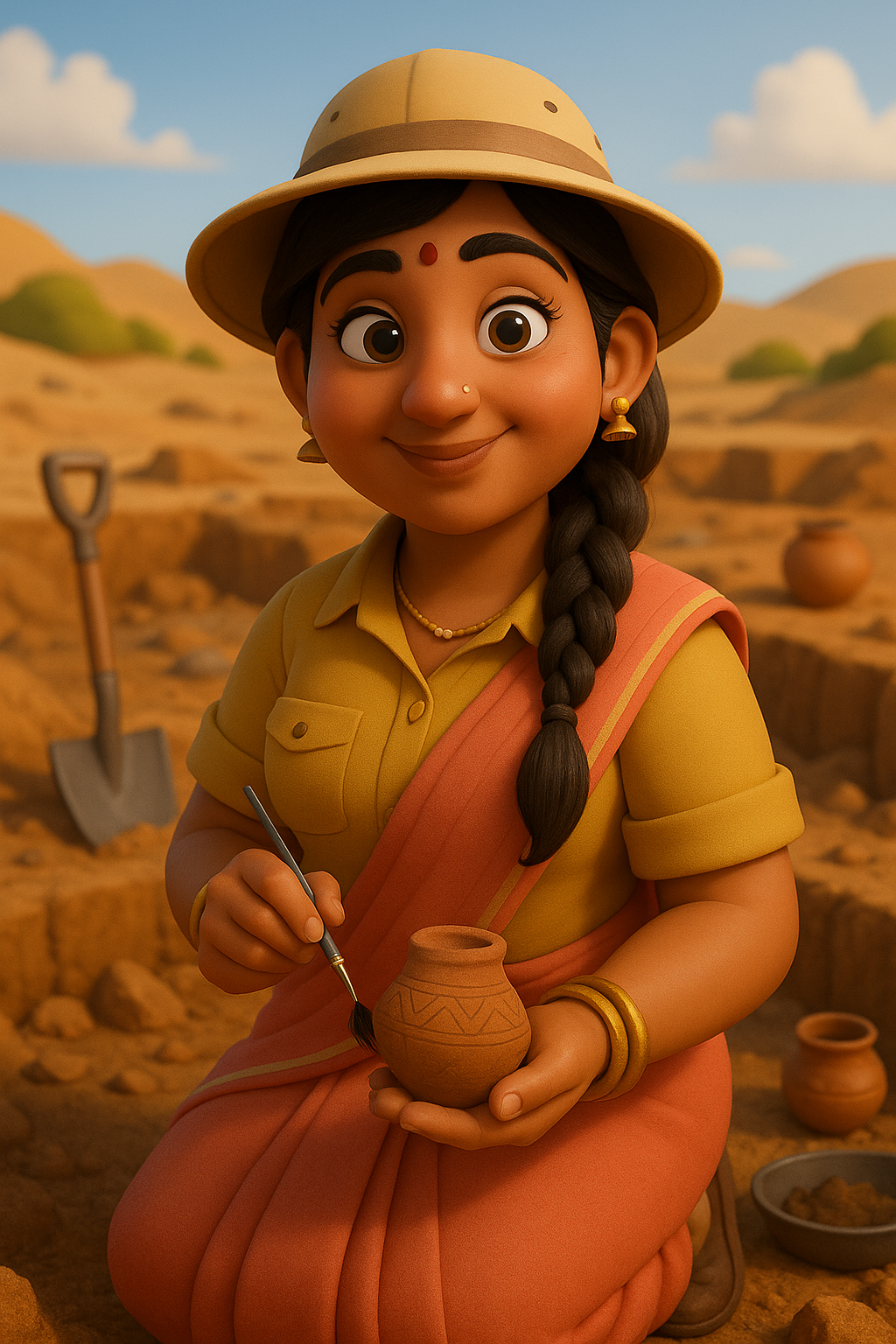
Kem cho, I’m Gulabo!"
"Namaste, salaam, and a big hello to my London fam! I’m Gulabo – Rajasthan’s desert rose who planted herself in London soil 17 years ago.
Picture this: Little me twirling in a ghaghra under the hot Rajasthan sun… Fast forward, and now I’m sipping chai on a cool East End morning, scrolling through Ilford Lane art like it’s my second home. Life, eh?
I’m an archaeologist – obsessed with uncovering history because every ruin, every artifact has a story. But London taught me something even cooler: living culture is everywhere! You don’t need to travel the world – it’s all here in East London.
I’ve seen Walthamstow markets buzzing with Turkish breads, Caribbean beats blasting from Ridley Road, Somali cafés serving the best coffee, and desi shops full of spices that smell like my mum’s kitchen.
And me? I’m a mix of it all – my wardrobe’s got lehengas and leather jackets, I eat jhal muri with chips, and I know how to say ‘how are you?’ in 6 languages thanks to this community.
So, if you want stories about Rajasthan’s palaces, London’s street art, or why camels are the ultimate desert SUVs – stick with me. We’ll make history fun… and fabulous!"

Cultural Celebrations
"Ever wondered how we all ended up here?"
Let’s face it – we didn’t come here for the rain, babes! Nobody said, “Ooooh, can’t wait to trade my sunshine for a soggy umbrella!” No, the truth is deeper.
A lot of us came because of poverty, created by centuries of exploitation of our people and lands. Empires, resources, power – you know the drill. And that history? It’s not some dusty book in a museum; it shapes our today and our tomorrow.
That’s why I’m on a mission: to explore how different communities came here. From South Asians to Caribbean, African to Eastern European – every family has a story, and those stories connect us.
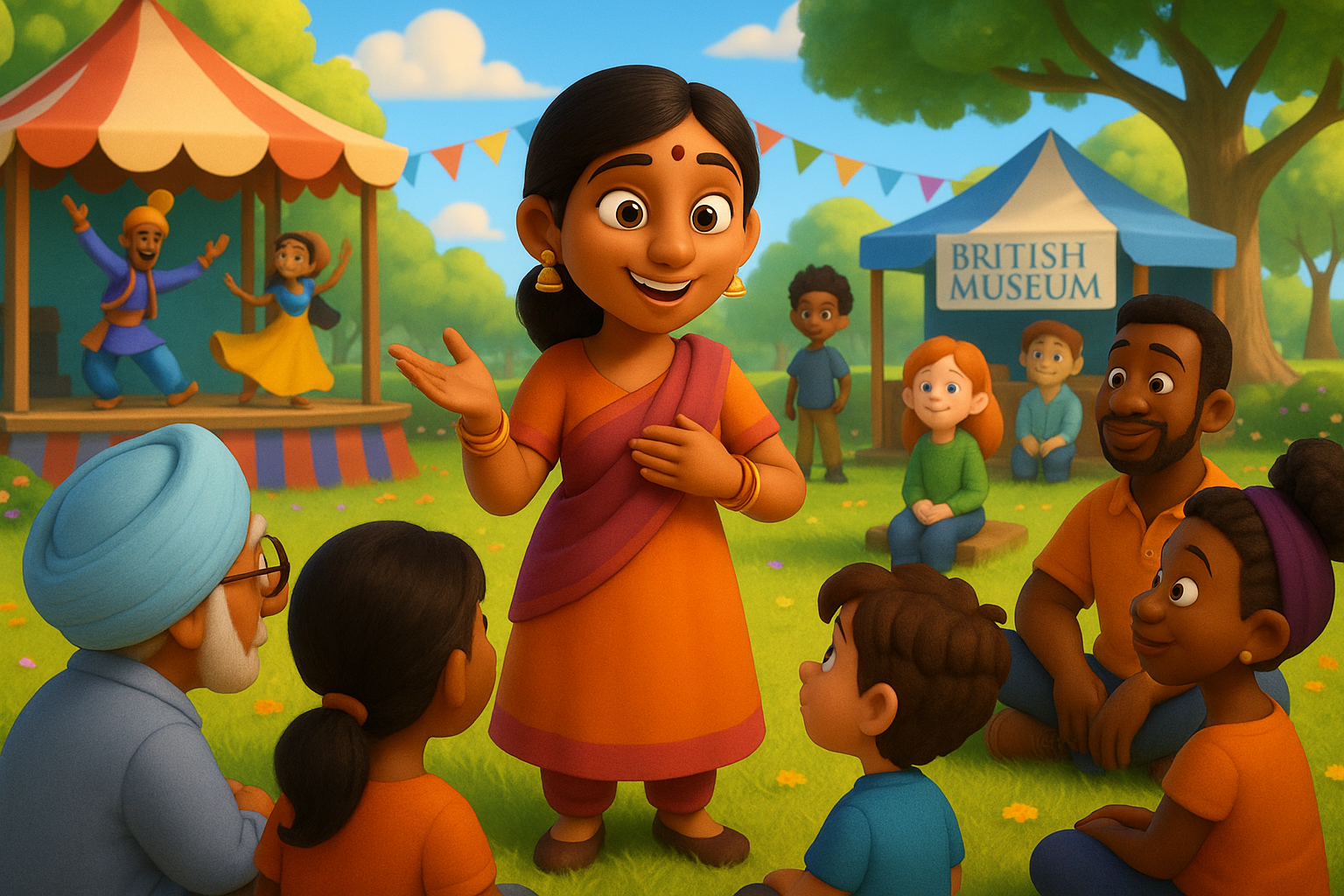
So what do we do? We organise cultural events and trips across the UK – from East End markets to British museums – to celebrate these stories and bring people together. Because understanding the past makes the present richer… and the future brighter (and maybe less rainy!).
So join me, Gulabo – East End explorer, cultural queen, and your history-loving bestie – as we turn lessons into laughter, heritage into a vibe, and community into family
Preserving Our History
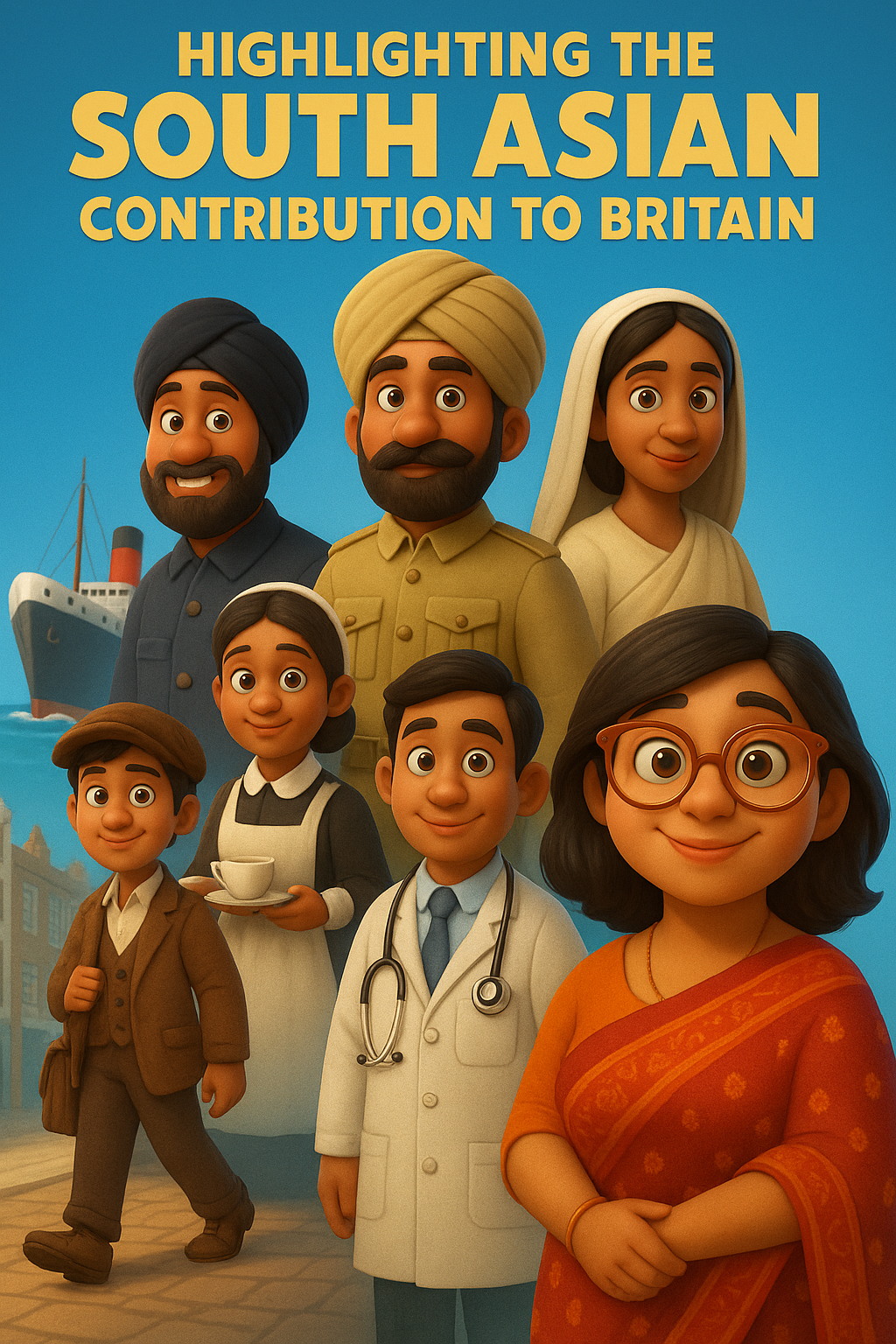
One of our proudest achievements is highlighting the South Asian contribution to Britain, far from the Western Front. This project aimed to bring recognition to the often-overlooked contributions of South Asians to British society and culture.

The Blossom Group: Why Colonial History Must Be Part of the National Curriculum
At The Blossom Group, we work with communities from every part of the world. Indians, Pakistanis, Bangladeshis, Nigerians, Ghanaians, Somalis, Eritreans, Syrians, Afghans, Moroccans, Algerians, Jamaicans, Barbadians, Brazilians, Colombians, Turkish families, Chinese elders, Filipinos, Eastern Europeans, Latin Americans, and long-established East Londoners all share our spaces. Our mission is simple: help people connect across cultures in a way that feels natural, warm, and human.
One of the strongest examples of our work is the Togetherness Vilages. It is not just a café. It is one of the most innovative integration projects anywhere in the UK. The moment you step inside, you hear stories mixing with spices, accents flowing into each other, and people who once felt invisible suddenly feeling recognised. Somali coffee brews next to Pakistani chai. A Jamaican grandmother swaps recipes with a Bangladeshi mum. A Polish neighbour learns how to wrap Moroccan msemen. Brazilian and Indian teens laugh over street food flavours that somehow make sense together.
Food breaks down fear. Stories build trust. And shared space creates belonging.
But for true understanding, something deeper is needed. Something our current education system often avoids.
This is why we believe colonial history must be part of the national curriculum, not as an optional module, not as a footnote, but as a core subject.
Because every community in our café carries history long before they walk through the door.
Colonialism shaped the movement of Indian and Pakistani families.
It shaped the journeys of Caribbean elders who arrived on the Windrush.
It shaped the borders and conflicts that pushed Syrians, Afghans, and Palestinians into new homes.
It shaped language, identity, and opportunity for Nigerians, Ghanaians, Somalis, and Kenyans.
It shaped the cultural blending and resistance of Latin America.
It shaped trade routes, labour patterns, and global inequalities that still echo today.
When schools teach history without its colonial chapters, students grow up with half the truth. They learn about kings, queens, inventions, and wars, but not about the power systems that built the modern world. They meet classmates from every continent but lack the context to understand why so many cultures intersect here in Britain.
This missing knowledge shows up in our work. Adults often tell us they reached their twenties or thirties before discovering how colonisation shaped their own family stories. That gap limits empathy, confidence, and identity.
Teaching colonial history is not about blame. It is about clarity.
It is about giving young people a full picture of the past so they can navigate the present with understanding instead of confusion.
It prepares them to engage with a diverse society respectfully and intelligently.
It builds the foundation for real integration and prevents stereotypes from taking the place of knowledge.
At the Togetherness Café, we weave these lessons into conversations every day. When a Somali elder shares what her village looked like before displacement, when a Caribbean elder explains why her parents came to Britain, when a Pakistani grandfather speaks about Partition, or when a Moroccan youth tells his story of language and identity, people begin to see each other not as strangers but as connected chapters in a larger story.
This is the kind of learning the national curriculum should support.
This is how a country becomes more understanding and more united.
This is how we build communities that thrive.
The Blossom Group will continue doing this work through food, storytelling, and shared spaces. But schools must meet us halfway.
A nation cannot understand its present until it teaches its past honestly.
Colonial history belongs in every classroom, because it lives in every community.
We are not just creating a café.
We are creating a blueprint for connection.
And honest history is the foundation that holds it all together.


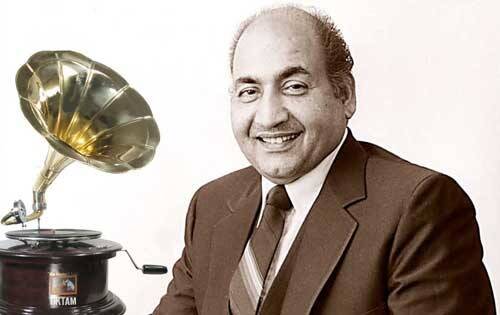
Rafi Saab on Green Street — A Night We Will Never Forget
Some voices don't sing to you. They sit next to you. They remember your mother, your father, your first heartbreak, your first joy. That is what Mohammed Rafi Saab's voice has always done — and that is exactly what filled the room when Blossom Group brought his music back to Newham for South Asian Heritage Month.
Who was Rafi Saab?
Mohammed Rafi (1924–1980) is one of the greatest playback singers the Indian subcontinent has ever known. Over 25,000 songs. Six Filmfare Awards. A Padma Shri. Ghazals, bhajans, qawwalis, patriotic anthems, love songs — he sang them all, in Hindi, Urdu, Punjabi, Bengali, Gujarati and more, because music was the one thing he refused to let borders divide. When he passed away in 1980, India declared two days of national mourning. That is the kind of love we're still carrying.
And his grandson sang for us
At East Ham Town Hall, we were honoured to welcome Rizwan Rafi Saab — Mohammed Rafi's eldest grandson. And he didn't just sit with us. He sang for us. In his grandfather's own borough, in front of his grandfather's own people, Rizwan Bhai lifted his voice and gave us a moment none of us will ever forget. Not a guest performance. A gift. From family to family. The Rafi family have long had roots in London, and that evening it showed. He didn't come as a guest from far away. He came home.
A century of community — right here on Green Street
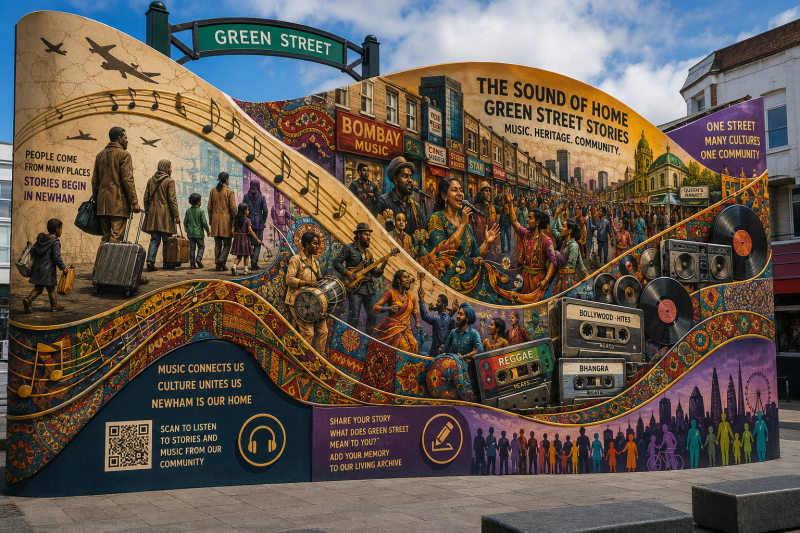
Then we did something we had never done before. We took the Rafi programme out of the hall and onto the street, to Summer Nights in Queen's Square on Green Street. First time. Rafi Saab's voice ringing out into the warm summer air, in the very square the community walks through every single day.
Because here is the truth: for over a hundred years, people from every corner of the world have come to Newham and made it beautiful. Jewish families at Queen's Market in the early 1900s. Caribbean families after the war. Indian, Pakistani, Bangladeshi, Somali, Tamil, African, Arab, Eastern European families since. Nobody handed Green Street to Newham. The communities built it — with their own hands, their own savings, their own late nights. They nourished this soil, and something magical grew.
Newham's real music map — and why Green Street belongs on it
Newham has a rich tapestry of music and art that too often gets overlooked. Bhangra dhols from Punjabi weddings. Bengali baul songs drifting from front rooms. Somali oud. Tamil devotional music. Nigerian afrobeats. Jamaican lovers rock. Arabic qasidas. Gujarati garba. Sylheti folk songs. Grime born on these very streets. Every country. Every community. Every genre. All of it living side by side, sometimes on the same block, sometimes in the same family.
And yet Green Street is so often left off the map. The cultural conversation about London stops in Shoreditch, or Southbank, or Camden — and forgets that some of the richest music-making in this city happens right here, in the shops, the community halls, the back gardens, the mosques, the mandirs, the gurdwaras, and yes, in Queen's Square.
That is where Blossom Group plays our part. We bring music, arts and togetherness to the diverse communities of Newham — and especially to the ones who are too often forgotten, marginalised, or told their culture is not "mainstream" enough. Elders sitting alone. Families new to this country. Communities who rarely see themselves reflected on a stage. They belong on the map. Their music belongs on the map. And we will keep making sure of it.
What Queen's Square gave back
Aunties stopped mid-shop and mouthed every word. Uncles wiped their eyes. Young people finally understood why nani won't let anyone change the radio. Neighbours from every background — African, Caribbean, White British, Arab, South Asian, Eastern European — stopped, stayed, clapped, danced. Nobody needed a translation. The music did the translating.
That is the achievement. Not the numbers. Not the applause. The togetherness.
Thank you to Newham South Asian Heritage Month, to East Ham Town Hall and Queen's Square for opening their doors and pavements, and to Rizwan Rafi Saab for singing for us, sitting with us, and honouring us with his presence.
Rafi Saab, we listened. We remembered. We loved you back — right there on Green Street, exactly where you belong.
🌸 Blossom Group — powered by chai, community, and songs that refuse to be forgotten.
Thank you to Newham South Asian Heritage Month, to East Ham Town Hall and Queen's Square for opening their doors and pavements, and to Rizwan Rafi Saab for honouring us with his presence.
Rafi Saab, we listened. We remembered. We loved you back — right there on Green Street, exactly where you belong.
🌸 Blossom Group — powered by chai, community, and songs that refuse to be forgotten.
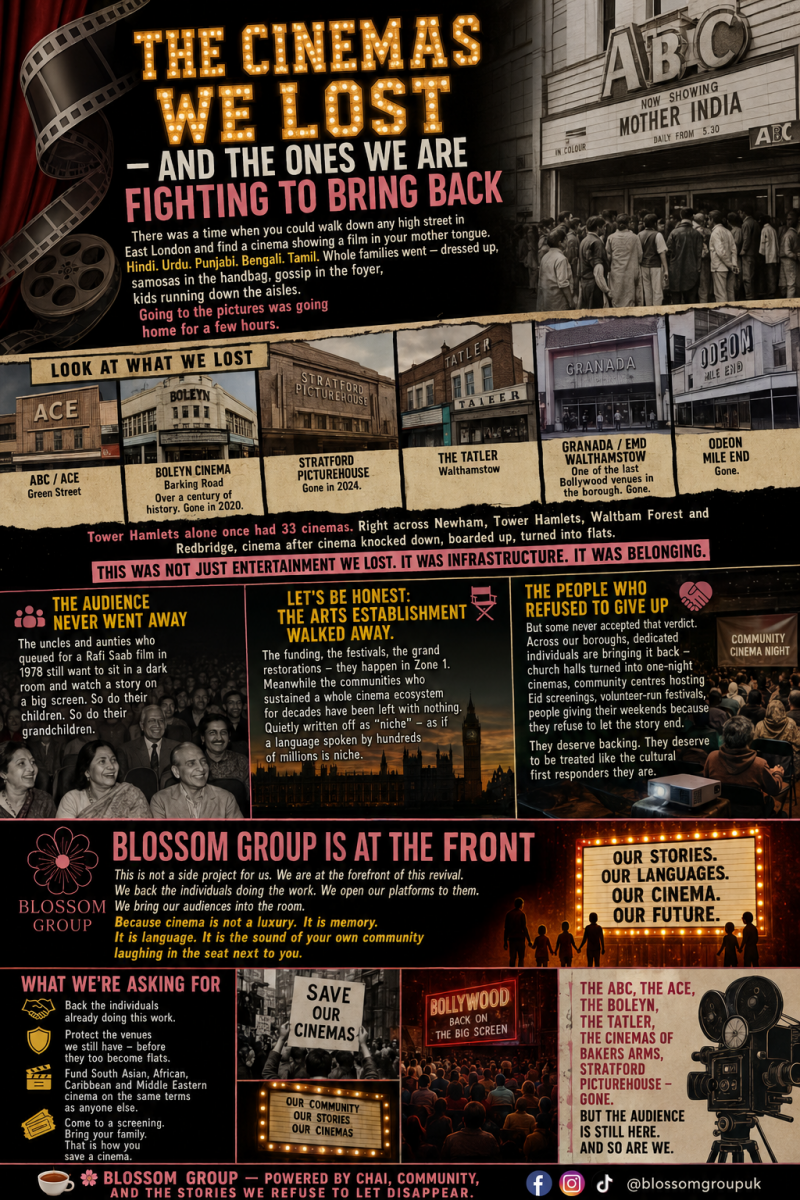
The Cinemas We Lost — And The Ones We Are Fighting To Bring Back
There was a time when you could walk down any high street in East London and find a cinema showing a film in your mother tongue. Hindi. Urdu. Punjabi. Bengali. Tamil. Whole families went — dressed up, samosas in the handbag, gossip in the foyer, kids running down the aisles. Going to the pictures was going home for a few hours.
Look at what we lost
On Green Street, the great ABC — later the ACE — gone. The Boleyn Cinema, over a century of history on Barking Road — gone in 2020. Stratford Picturehouse — gone in 2024. The Tatler in Walthamstow and the whole cluster of cinemas around Bakers Arms — gone. The Granada / EMD Walthamstow, one of the last Bollywood venues in the borough — gone. The Odeon Mile End — gone. Tower Hamlets alone once had 33 cinemas.
Right across Newham, Tower Hamlets, Waltham Forest and Redbridge, cinema after cinema knocked down, boarded up, turned into flats.
This was not just entertainment we lost. It was infrastructure. It was belonging.
The audience never went away
The uncles and aunties who queued for a Rafi Saab film in 1978 still want to sit in a dark room and watch a story on a big screen. So do their children. So do their grandchildren.
The demand didn't disappear. The venues did. The investment did. The arts world's interest did.
Let's be honest: the arts establishment walked away. The funding, the festivals, the grand restorations — they happen in Zone 1. Meanwhile the communities who sustained a whole cinema ecosystem for decades have been left with nothing. Quietly written off as "niche" — as if a language spoken by hundreds of millions is niche.
The people who refused to give up
But some never accepted that verdict. Across our boroughs, dedicated individuals are bringing it back — church halls turned into one-night cinemas, community centres hosting Eid screenings, volunteer-run festivals, people giving their weekends because they refuse to let the story end.
They deserve backing. They deserve to be treated like the cultural first responders they are.
Blossom Group is at the front
This is not a side project for us. We are at the forefront of this revival. We back the individuals doing the work. We open our platforms to them. We bring our audiences into the room.
Because cinema is not a luxury. It is memory. It is language. It is the sound of your own community laughing in the seat next to you.
What we're asking for
- Back the individuals already doing this work.
- Protect the venues we still have — before they too become flats.
- Fund South Asian, African, Caribbean and Middle Eastern cinema on the same terms as anyone else.
- Come to a screening. Bring your family. That is how you save a cinema.
The ABC, the ACE, the Boleyn, the Tatler, the cinemas of Bakers Arms, Stratford Picturehouse — gone. But the audience is still here. And so are we.
🌸 Blossom Group — powered by chai, community, and the stories we refuse to let disappear.
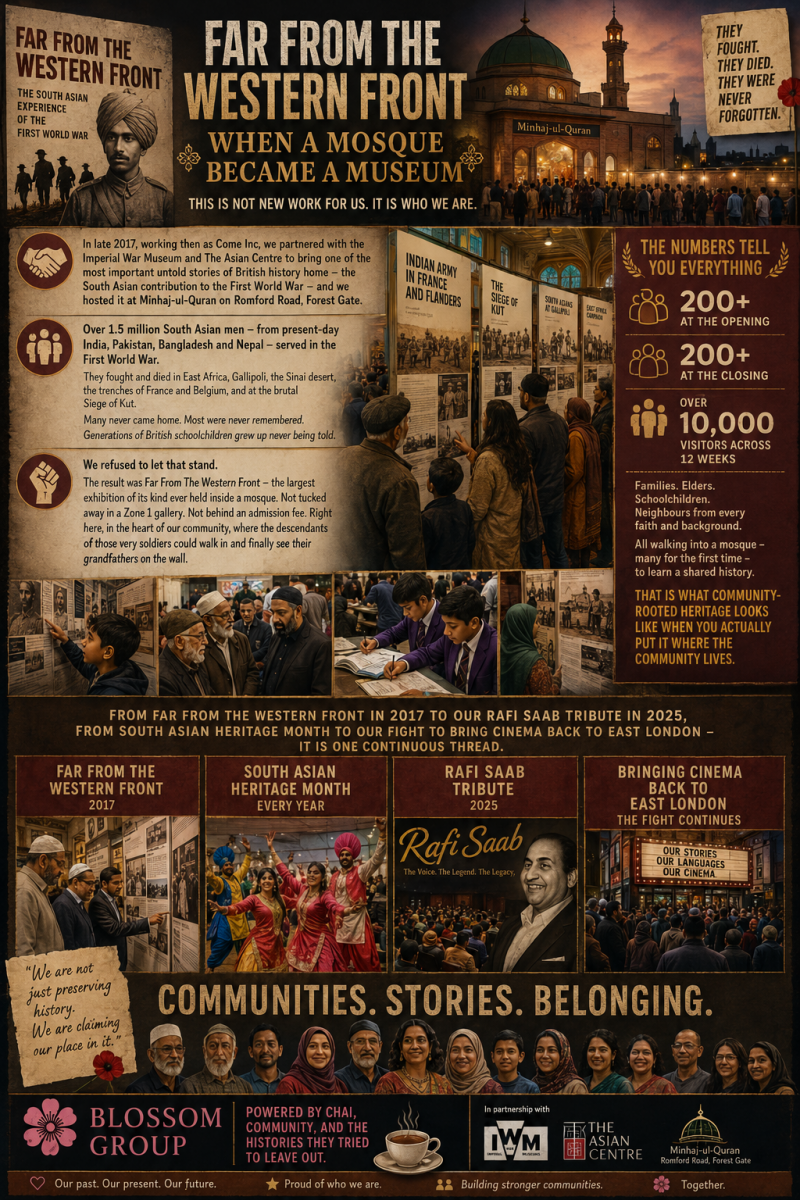
Far From The Western Front — When A Mosque Became A Museum
This is not new work for us. It is who we are.
In late 2017, working then as Come Inc, we partnered with the Imperial War Museum and The Asian Centre to bring one of the most important untold stories of British history home — the South Asian contribution to the First World War — and we hosted it at Minhaj-ul-Quran on Romford Road, Forest Gate.
Over 1.5 million South Asian men — from present-day India, Pakistan, Bangladesh and Nepal — served in the First World War. They fought and died in East Africa, Gallipoli, the Sinai desert, the trenches of France and Belgium, and at the brutal Siege of Kut. Many never came home. Most were never remembered. Generations of British schoolchildren grew up never being told.
We refused to let that stand.
The result was Far From The Western Front — the largest exhibition of its kind ever held inside a mosque. Not tucked away in a Zone 1 gallery. Not behind an admission fee. Right here, in the heart of our community, where the descendants of those very soldiers could walk in and finally see their grandfathers on the wall.
The numbers tell you everything
- 200+ at the opening. 200+ at the closing.
- Over 10,000 visitors across 12 weeks.
- Families. Elders. Schoolchildren. Neighbours from every faith and background. All walking into a mosque — many for the first time — to learn a shared history.
That is what community-rooted heritage looks like when you actually put it where the community lives.
From Far From The Western Front in 2017 to our Rafi Saab tribute in 2025, from South Asian Heritage Month to our fight to bring cinema back to East London — it is one continuous thread. Communities. Stories. Belonging.
🌸 Blossom Group — powered by chai, community, and the histories they tried to leave out.