

MEET Q
Blossom’s Time Lord
Children always ask questions.
Big ones.
Sharp ones.
The kind that make adults stop, scratch their heads, and sometimes… avoid answering.
But here’s the truth:
If we want to fix things today, we can’t run from the root causes of yesterday.
That’s where Q comes in.
Q is 11 years old, East London born, and a Time Traveller Extraordinaire.
At Blossom, Q takes us on journeys through time — back to our grassroots, back to the root causes of everything we see around us now.
Why?
Because history isn’t just about the past.
It’s about understanding the struggles, the survival, and the stories that shaped who we are today.
Q reminds us:
👉 To research, not just react.
👉 To ask questions, even when the answers are uncomfortable.
👉 To look deeper, so we can grow stronger.
At Blossom, we call him our Time Lord — because through his questions, we travel back, we reflect, and we find the wisdom we need to move forward.
🌸 Our Commitment
At Blossom, we are committed to real equity.
And to get there, we must face the root reasons — the hard truths, the hidden stories, and the causes too often ignored.
Because only by understanding where the struggle began can we build a future that is fair, strong, and truly equal.
✨ Q shows us that children’s questions aren’t small — they are the sparks that light the way to real change.
Bazaar of the Story Tellers - Khissa Kahaani Bazaar
Welcome to the Khissa Kahaani Bazaar, a unique digital space inspired by the legendary Qissa Khwani Bazaar of Peshawar, brought to you by BLOSSOM GROUP in East London. Explore a vibrant collection of stories that connect, teach, and heal, reflecting our commitment to turning community trust into real change.

Khissa Kahaani Bazaar
By Q — 11 years old, East London, Time Traveller Extraordinaire
Yo! I’m Q — part-time school kid, full-time time traveller.
I was born in the UK — proper East London boy, innit. But my story? It started way before me.
🌍 The Roots
My grandparents and great-grandparents came from Pakistan a long time ago — back when TikTok wasn’t even a dream and a horse was basically Uber.
So yeah, I’m British Pakistani.
But sometimes it feels like parts of the story are missing.
We know who we are now.
But what about before?
The stories that never made it into the books?
📖 Lost Stories
Here’s the truth:
-
Loads of stories got lost.
-
Books were burned.
-
Voices silenced.
-
History rewritten — usually by people who said they were “doing us a favour.”
And don’t even get me started on that whole “We discovered your land” line.
Like, bruv — imagine our ancestors standing on the beach with banners saying:
“PLEASE DISCOVER US, LOVELY PEOPLE! We’ve been waiting!”
Nah, fam. We were already there —
building cities, writing poetry, drinking chai, living life.
No one needed discovering.
💔 The Cost
Meanwhile, our lands?
Drained. Stripped. Broken.
So what happened next?
Our grandparents rolled up here to rebuild the very country that had broken theirs.
They drove buses.
Worked in factories.
Cleaned hospitals.
They kept everything moving.
🏠 Life in the UK
But their new life wasn’t easy.
They faced:
-
Struggles.
-
Racism.
-
Name-calling.
-
Being treated like second-class citizens.
Yes, there were good times too —
strong communities, big weddings, aunties making life sweet.
But make no mistake:
It. Was. Hard.
Ten people crammed in one house.
No heating.
One samosa feeding five kids like it’s treasure.
That’s real survival mode.
🔑 Why It Matters
All of that history — all the moves outsiders made back then — shaped everything we see today:
-
Where we live.
-
What jobs we do.
-
How we see ourselves.
-
Even the fights we’re still having now.
✨ This is our story.
Not lost. Not silenced.
Told loud and proud — right here in the Khissa Kahaani Bazaar.
So what’s Khissa Kahaani Bazaar then?
It’s our space.
A digital version of a legendary spot in Peshawar called Qissa Khwani Bazaar — the “Bazaar of Storytellers.”
Back in the day, people sat, sipped chai, and swapped stories.
No Netflix. No Insta likes.
Just vibes, voices, and truths.
And now?
We’re bringing that energy back — for everyone.
Kids, grown-ups, the whole crew.
What’s here for you?
-
Stories that actually mean something.
Funny ones. Deep ones. True ones. Wild ones. -
Big questions — the kind no one’s too small to ask.
-
A reminder that the past, present, and future?
It’s all connected.
When we know the stories, we know ourselves.
And that changes EVERYTHING — school, family, friendships, even the big “Who am I?” stuff.
🔥 So listen up, yeah? Don’t sleep on this.
When your grandparents or uncles or aunties start talking — about Partition, about slavery, about how Hawaiians lost their kingdom, how Aborigines got crushed, how Africa was stripped, how islands were snatched for sugar, how famines were CREATED, and how all of that led to them coming to Britain…
LISTEN.
Cos these stories aren’t just history.
They’re us.
They explain why the world is like this.
And maybe how we can make it better.
So click around. Watch. Read. Ask questions. Tell YOUR story.
Cos this isn’t just about the past.
This is about the future.
And trust me:
Time waits for no one.
MEET DEGANAWIDA
America's before America
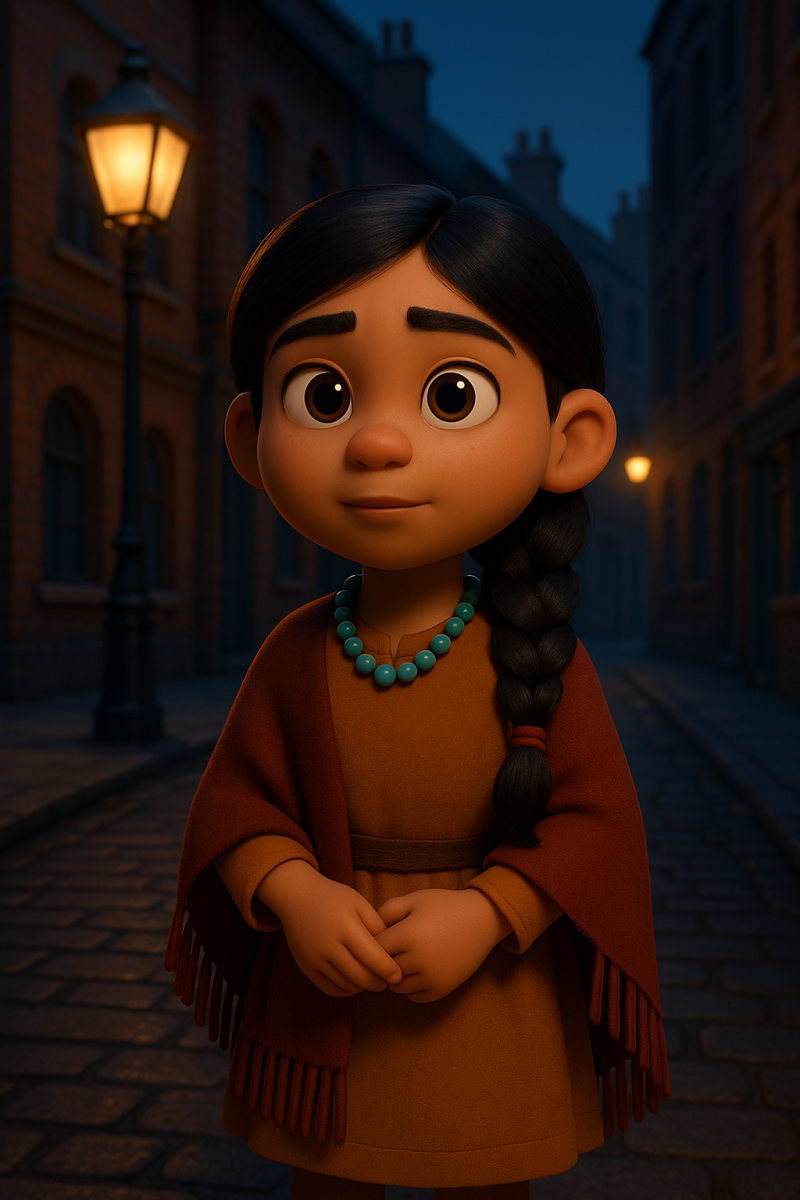
Kaaka Q Time Talks – Episode 1 Title: “The Day They Said They Discovered Us” Guest: Deganawida – Haudenosaunee (Iroquois Confederacy), 13 years old
Yo, yo! What’s good, people? It’s your boy Kaaka Q — part-time school kid, full-time time traveller. The Q? Yeah, that’s for Questions, cos trust me, I’ve got a million.
Now today… we’re jumping way back in time. Like, no Wi-Fi, no TikTok, no Uber Eats — just forests, rivers, and some of the most organized societies on Earth.
We’re in the land that’s now called America. But before America… there was a whole world here. Nations, councils, democracies — yeah, they had politics before your favourite president was even a thought.
And I’ve got someone with me who saw it all change. Her name is Deganawida. She’s 13, from the Haudenosaunee — some of you might know them as the Iroquois Confederacy. Back then, her people ran one of the oldest democracies on Earth. Facts.
So what happened when ships showed up on the horizon? How did things go from peace to chaos? Let’s hear it straight from someone who lived it.
Kaaka Q:
Deganawida, big respect for joining me. Tell everyone who you are and what life was like before the Europeans came.
Deganawida:
My name is Deganawida — it means “Two Rivers Flowing Together.” I am of the Turtle Clan, Haudenosaunee. We are the People of the Longhouse.
Before they came, life was strong. We had the Great Law of Peace — that is our way of living together without war. Clan mothers chose our chiefs. We planted the Three Sisters — corn, beans, squash. We hunted deer in the forests, fished in clear rivers.
We gave thanks for everything — the sun, the moon, the rain, the earth. Children laughed. The council fire burned. We thought it would burn forever.
Kaaka Q:
Bruv… sounds like you had it patterned. And you had democracy before most countries even knew what that word was, right?
Deganawida:
Yes. Our Great Law influenced others. Even the founders of the United States learned from us. But they did not keep the respect for women and nature that we had.
Kaaka Q:
(shakes head)
Of course they didn’t. So… then the Europeans pull up. Tell me what you saw.
Deganawida:
Ships like floating mountains came to our shores. At first, we were curious. We welcomed them. We shared food. They gave knives, beads, metal pots. We thought, maybe two rivers can flow together.
But then came guns. Soldiers. Priests. They said, “Be like us or you are nothing.”
Kaaka Q:
Here we go…
What happened to your tribe?
Deganawida:
We lost many. Some in battle. More from sickness we had never seen — smallpox, measles. Entire villages vanished in days.
Then came papers. They said, “Sign this treaty.” We did not know it meant goodbye to our land forever.
Kaaka Q:
Bruv. That’s cold. And the kids? What happened to them?
Deganawida:
They took our children. Cut their hair. Beat them for speaking our words. In schools far away, they said, “Forget your people. Be like us.” They tried to erase us.
Kaaka Q:
(silent for a moment)
That… hits. And then later, everyone’s acting like Columbus was some kind of hero, saying he “discovered America.”
How does that sound to you?
Deganawida:
(bitter laugh)
Discovered? We were here thousands of years before. How do you discover a land full of life? Fires burned. Children laughed by the river. There were nations, laws, peace. You don’t “discover” people. You invade them.
Kaaka Q:
Bars. Straight-up bars. So… what do you want kids listening now to know?
Deganawida:
That we are still here. Our language, our songs, our fire — still burning. But also this: what happened to us was not an accident. It was greed. And when the earth cries today — when rivers choke, when forests fall — it is because that hunger never stopped.
Kaaka Q:
So you’re saying what happened to you isn’t just history — it’s a warning.
Deganawida:
Yes. If you forget, it will happen again.
Kaaka Q (closing):
Wow. Deganawida… you just schooled us harder than my teacher ever could. People, don’t forget this: the past isn’t dead. It’s talking to us.
So next time someone says “Columbus discovered America”?
Tell them: Nah. People were here. People are still here.
Stay curious. Keep asking questions.
I’m Kaaka Q — and I’ll see you… in another time.
Peace.
Kaka Q Interviews Abdul in the Bengal Famine
Kaka Q stepped out of the portal into heat that hit him like a slap. He pulled his scarf over his mouth. It did nothing. The smell still pushed through. Rot. Sweat. Smoke. And something worse that he could not name at first.
Then he saw the bodies.
They lined the street in rows that no one had the strength to move. Some were wrapped in cloth. Most were not. Flies covered them in black clouds. A child lay in the middle of the road as if he had simply stopped walking and dropped where he stood.
Kaka Q had traveled through centuries, but nothing prepared him for Bengal in 1943.
He walked slowly, careful not to step on anyone. People who were still alive watched him with hollow eyes. Their limbs were thin as sticks. Skin stretched tight over bone. Some reached out weak hands, not even asking for food, just asking to be seen.
A man sat by a wall, barely upright. His ribs showed through his shirt. His face was sunken, but his eyes still held a spark. Kaka Q approached him.
“Sir,” Kaka Q said softly. “My name is Kaka Q. I am here to listen. Can you tell me what happened?”
The man looked up. “I am Abdul,” he said. His voice was rough, scraped thin by hunger. “If you want to know what happened, look around you.”
Kaka Q nodded. “I want to understand. For the future.”
Abdul took a slow breath.
“You see these streets? They were full of life once. Markets. Children playing. Now they are graves without soil. People die where they stand, boy. They walk until their legs fail. Then they lie down, and the world moves on without them.”
Kaka Q swallowed hard. The air tasted bitter.
“What caused all this?” he asked.
“Hunger did,” Abdul said. “But not the kind born from the earth. The fields failed, yes, but it did not have to become this. Boats were seized. Rice was taken. Prices rose until only the rich could eat. Some say it was war strategy. Some say it was punishment. What I know is this: millions of us starved while grain was exported under guard.”
He pointed down the street to a covered cart. “See that? Wheat. Perfect wheat. Leaving Bengal. Heading to ships. While our children die like this.”
Kaka Q felt his chest tighten. “And what about Churchill?” he asked quietly.
Abdul’s jaw clenched. “His voice reached us. Not his face. His words. He said Indians bred too much. He blamed us for our hunger. He refused to release grain. He called this famine our own doing. While we swallowed grass and leaves to stay alive.”
He paused, eyes unfocused, as if seeing ghosts.
“You want to know the smell? It is not just death. It is fear. It is a whole land grieving at once. When the wind blows from the river, the stench follows it. There are days I cannot tell where the dead end and the living begin.”
Kaka Q stood silent. He had interviewed warriors, kings, inventors. None ever spoke like this.
Abdul continued. “I watched my neighbors turn into shadows. I watched strong men collapse like empty sacks. Mothers tried to quiet their babies even when their breasts were dry. And every morning, the bodies multiplied. The British officers passed through with clean boots and rifles. They never looked down.”
Kaka Q knelt beside him. “How do you keep going?”
Abdul looked toward a small hut. “My mother. She told me to live. Even when she could not eat anymore. Even when her voice faded.” His eyes glistened. “I walk each day because she asked me to.”
For a moment, neither spoke.
Kaka Q then whispered, “Abdul, I promise your story will not disappear. I will carry it forward. People will know what happened here.”
Abdul nodded slowly. “Then tell them the truth. Tell them hunger is not just empty stomachs. It is broken dignity. It is silence from those who had the power to stop it and chose not to.”
Kaka Q stood, the smell of death pressed around him like a heavy cloth. He touched the small device at his belt. The portal hummed open.
Before stepping through, he looked back one last time at Abdul, sitting among the ruins of an entire world.
Abdul raised a hand, thin as a twig. “Remember us,” he said.
“I will,” Kaka Q answered.
And then he vanished into the future, carrying with him the weight of millions of unheard voices.
Kaka Q Interviews Kamau during the Mau Mau Rebellion
When Kaka Q stepped out of the portal, the forest heat wrapped around him like a thick blanket. Smoke drifted through the trees. Gunfire echoed far off, sharp and sudden. This was Kenya in the 1950s. The Mau Mau uprising.
He walked toward the sound of shouting and reached a clearing. Huts were burning. Flames tore through thatched roofs, turning homes into ash. Pots lay cracked on the ground. Clothes were scattered as if ripped from people while they ran.
At the center of it all, a man knelt with his hands tied behind his back. His face was bruised. Blood ran from a cut near his eyebrow, but his eyes still held a steady fire.
Kaka Q approached him slowly. “Sir, I’m here to listen. My name is Kaka Q.”
The man looked up. “I am Kamau.”
“You’re caught in this?” Kaka Q asked.
Kamau nodded. “I came here to work on plantations. I had no plans to fight. But plans do not matter when the world breaks around you. The British soldiers accuse anyone they wish. If they need bodies for their camps, they take us.”
Behind them, soldiers shouted orders. Villagers were being pushed into lines. Some were dragged toward the barbed wire of a detention camp built in a rush, the earth still fresh beneath the posts.
Kaka Q steadied his breath. “What did they do to you?”
Kamau looked toward the burning huts. “Beat me. Asked me again and again if I was Mau Mau. I told them I was not. Many of us are not. But they want confessions. They want fear. They want to crush the Kikuyu spirit so the empire stays firm.”
A scream cut through the clearing. A woman was pulled by her hair, shoved toward the kneeling line. The soldiers spoke with cold confidence, as if this destruction was routine.
Kaka Q’s voice shook. “Why so much violence?”
“Control,” Kamau said. “The British fear losing the land. They fear losing power. They tell the world the Mau Mau are savages, while they hide the torture camps. They hide the beatings and deaths behind fences and silence.”
He winced as smoke drifted across his face. “I have seen famine before in my childhood in Bengal. Millions died while leaders blamed us. Here I see a different kind of destruction, but the same hand behind it. Empire chooses who eats and who bleeds.”
Kaka Q knelt next to him. “Do you want the future to know what happened here?”
Kamau locked eyes with him. “Yes. Tell them we were human beings. Not numbers. Not rumors. Not wild stories told in London. Tell them the camps were real. Tell them the humiliation was real. Tell them these flames did not rise by accident. They were lit by orders.”
Soldiers were moving closer now. Time was running out.
Kaka Q reached for his device. “Kamau… I have to go. One last message?”
Kamau’s voice softened. “Tell the future to watch power carefully. Tell them suffering grows when no one pays attention. Remember this place. These people. This pain. It meant something.”
Kaka Q’s eyes stung. “I will.”
He opened the portal. Blue light cracked through the smoky dusk. Before stepping inside, he looked back at Kamau, tied, bruised, but unbroken under the burning sky.
“I won’t forget you,” Kaka Q whispered.
Then he stepped through, carrying Kamau’s truth across time.
Kaka Q Interviews Youssef, Age 9, in Gaza
The portal opened beside the broken wall of what used to be an apartment building. Dust floated in the air like drifting ash. Kaka Q stepped forward carefully. The street was quiet, but not peaceful. Quiet here meant exhaustion. Quiet meant people had cried for so long they had no voice left.
He saw a boy sitting on the ground with his knees pulled to his chest. The boy’s hair was covered in gray dust. He had a small backpack beside him, the zipper broken, one strap torn.
Kaka Q walked over and knelt. “Hello,” he said gently. “My name is Kaka Q. I travel to talk to people and learn their stories. What’s your name?”
The boy looked up. His eyes were dark and tired. “Youssef,” he said. “I’m nine.”
Kaka Q nodded. “Can I sit with you?”
“Yes,” Youssef whispered.
Kaka Q sat beside him on a fallen piece of concrete. “What happened here, Youssef?”
Youssef’s hands tightened around his backpack. “My home… it collapsed.” He took a breath. “My mom and dad were inside. My brothers. My little sister. Five of them.” He didn’t raise his voice. He didn’t cry. The words came out flat, the way words come from someone who has cried enough already.
Kaka Q kept his voice calm. “You got out?”
“I was outside getting bread,” Youssef said. “When I came back… everything was gone. Neighbors said a strike hit the building. They tried to dig. They tried very hard. But…” He lowered his head. “They couldn’t find them alive.”
Kaka Q placed his hands on his knees, making sure not to reach toward the boy unless the boy wanted it. “Do you have anyone left?”
“My aunt,” Youssef answered. “Her house is full now. So many families lost people. Everyone is trying to fit everyone else inside. Sometimes we sleep on the floor. Sometimes outside. The nights are cold.”
“What is the hardest part for you?” Kaka Q asked softly.
Youssef’s voice shook. “The sounds. Every time I hear an explosion, even far away, my heart jumps. I think it’s happening again. I think I’m losing someone again.”
He paused. “Children here learn fear before they learn anything else. We learn where to hide. We learn how to comfort babies when the adults are shaking. We learn that some days the sky is something to run from.”
Kaka Q felt a heavy ache in his chest. “Do you still have hope?”
Youssef looked up, eyes bright but wounded. “I hope for school again. I hope for my friends. I hope we can sleep one night without sirens.” He pulled his backpack close. “I keep my mom’s scarf in here. Teachers say hope is something you hold onto. So I hold onto this.”
Kaka Q spoke quietly. “You’re brave.”
Youssef shook his head. “I’m just a kid. Kids shouldn’t have to be brave. We should be playing. We should be learning. Not running. Not counting which buildings are gone.”
Another distant boom rolled across the air. Youssef didn’t scream, but he flinched hard, instinct pulling his shoulders up. When the echo faded, he exhaled slowly.
“That’s what I mean,” he said. “Even when it doesn’t hit us, it hits inside.”
Kaka Q looked at him with steady eyes. “Youssef, I promise your story will be heard. The world needs to understand what children here face.”
Youssef nodded, clutching the backpack strap. “Tell them we are not numbers. Tell them we had families. We had dreams. Tell them we are still trying to grow up, even when everything around us keeps breaking.”
“I will,” Kaka Q said. “I won’t forget you.”
The portal opened behind him with a low hum. Before stepping through, he turned one last time.
Youssef sat on the concrete, small and strong in a place that demanded too much of him. The ruined street stretched out around him, but he held onto the scarf, held onto memory, and held onto whatever hope he could.
Kaka Q whispered, “Your voice will reach the future.”
Then he disappeared into the light, carrying Youssef’s story with him.