

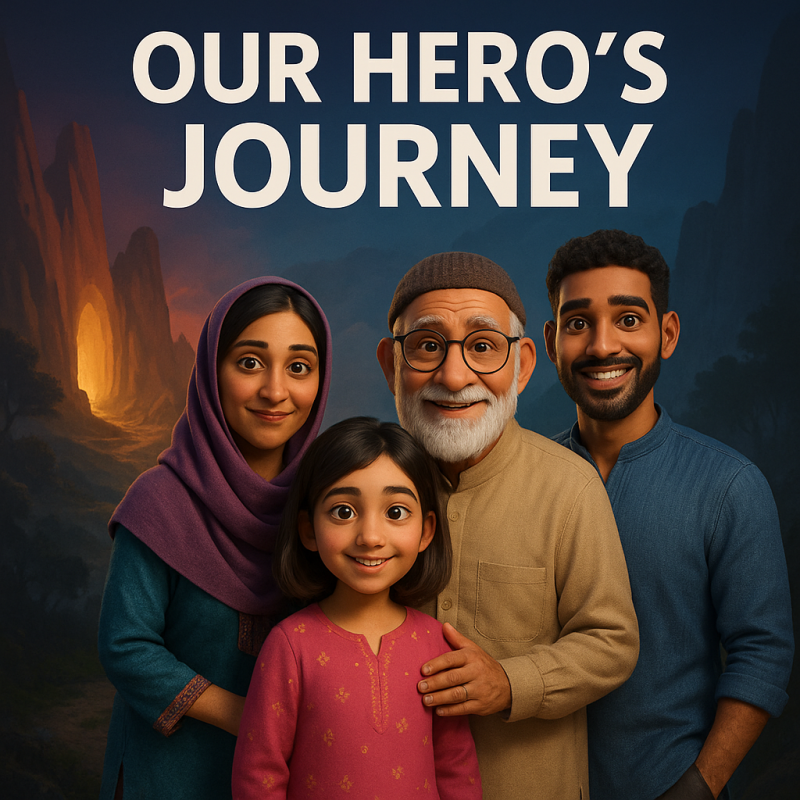
🌍 At Every Stage of Life… We Begin a Hero’s Journey 🌍
Whether you're young or more mature…
Living in your homeland or trying to build a life far from it…
You are the hero of your story.
We all face moments that test our strength:
-
💸 Paying bills, facing bailiffs
-
🏠 Poor housing, bad landlords
-
📑 Forms we don’t understand
-
🩺 Poor health, no GP access
-
⚰️ Bereavement, grief, loneliness
-
💼 No job, zero-hour contracts, gig economy stress
-
🌐 Digital poverty, lack of internet or access to help
-
🧍♀️ Bullying, domestic violence, family breakdown
-
📚 Struggling with education, school pressure, no support
-
💰 Family pressure to send money home
-
🌏 Worry for loved ones in native countries
-
🎓 Language barriers, unfamiliar systems
-
🧠 Mental health struggles, isolation
-
🧾 Facing racism, discrimination, being dehumanised
-
🕳️ Feeling ignored, unseen, alienated
-
❌ Crime, exploitation, lack of opportunity
Every one of these is a battle—a challenge not just of survival, but of dignity.
And still… you rise.
That’s why we created Blossom 🌸
A simple, welcoming way to support you—right where you are.
To remind you:
💬 You are not weak for struggling.
🧕🏽 You are not alone in this.
🌱 You are travelling your hero’s journey—even when it doesn’t feel like it.
We’re here to hold your hand—gently, firmly, without judgement—
and help you take that next small step.
Whether it’s a form, a feeling, or a future…
We’ll walk beside you.
Because you matter.
Because you are powerful.
And because every journey deserves support.

What We Do at Blossom Group
At Blossom Group, we guide people through real-life transformation—the kind that doesn’t just change your circumstances, but reshapes how you see yourself.
We don’t fix people.
We don’t give advice from a distance.
We walk with you—through the hard, the unclear, the breaking-open parts of your life—until you begin to see yourself as the hero of your own story.
💬 In Simple Terms:
We help people grow, heal, and reclaim their sense of self—through coaching, connection, and powerful storytelling tools like The Hero’s Journey.
🌿 How We Do It:
1. We Meet You Where You Are
No judgment. No pressure. Just space to be honest about what you’re facing—whether it’s burnout, loss, reinvention, or just that nagging sense of “there must be more than this.”
2. We Use a Proven Framework for Change
We guide you through the 12 stages of Your Hero’s Journey. It’s flexible, human, and deeply validating. Wherever you are, it gives you a map—and shows you you’re not stuck, you’re in process.
3. We Hold Space for Your Becoming
This isn’t about performance or perfection. It’s about real, grounded transformation—at your pace, in your voice. We offer reflection, tools, and presence—so you can do the work only you can do.
4. We Help You Bring It Home
Growth isn’t just about insight—it’s about integration. We support you as you return to your life with new clarity, purpose, and energy—ready to lead, create, connect, and live differently.
🌟 Why It Matters:
Because everyone deserves to feel seen.
Everyone deserves to feel whole.
And everyone deserves a chance to turn their struggle into strength, and their story into something that matters.
That’s what we’re here for.
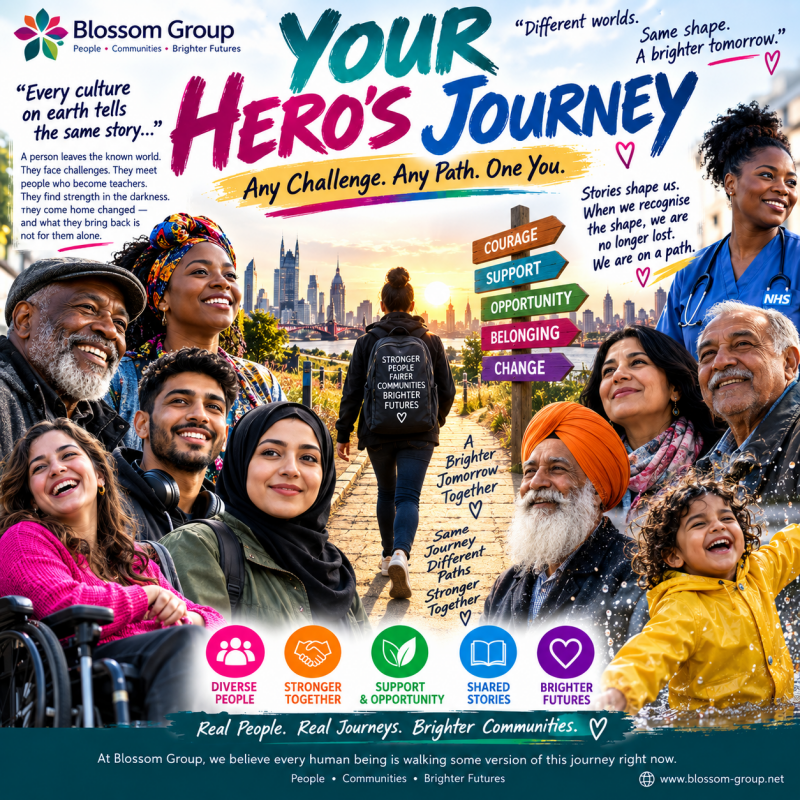
Your Hero’s Journey
Any Challenge. Any Path. One You.
Every culture on earth tells the same story. A person leaves the known world. They face something that threatens to undo them. They meet strangers who become teachers. They descend into darkness and find, in that darkness, a piece of themselves they didn’t know was there. They come home changed — and what they bring back is not for them alone.
We tell this story again and again because it is not a story. It is the shape of being alive.
At Blossom Group, we believe every human being is walking some version of this journey right now. The teenager in a council flat wondering if her voice matters. The grandfather learning to grieve his wife in a country whose language is not his own. The nurse who has held a hundred hands through their last hour and is quietly falling apart. The boy whose caste was decided before he took his first breath, refusing to let it decide the rest. The woman at the top of her field discovering that she has been performing a life instead of living one. The child laughing in a puddle who has just taught his mother something about joy.
Different worlds. Same shape.
Stories shape us because we are, at some level, made of them. Long before we can reason, we are learning what a life looks like from the ones we hear around us — whose pain gets named and whose is silenced, whose ambition is celebrated and whose is punished, who is called a hero and who is called a burden. When we don’t know the story we are in, we are lost in it. When we recognise the shape, we are no longer lost. We are on a path.
The Hero with a Thousand Faces
In 1949, an American scholar named Joseph Campbell published a book called The Hero with a Thousand Faces. He had spent his life reading. Not one tradition — all of them. The Odyssey and the Ramayana. The Buddha and the Christ. The dreamings of Aboriginal Australia and the trickster tales of West Africa. The Sufis and the Sioux. The old Irish sagas and the folk stories his students in New York brought from their grandmothers in Poland, Trinidad, Japan.
He noticed something. Across continents that had never touched, across languages that had never met, across religions that would have called each other strangers, human beings were telling the same story. The details changed — the desert became a forest became a sea became a subway — but the shape did not. Someone leaves. Someone struggles. Someone is helped. Someone descends. Someone returns transformed.
Campbell called this pattern the monomyth — the one story with a thousand faces. He meant the title literally. The hero has a thousand faces because the hero is every face. Yours. Your mother’s. Your neighbour’s. The face of the woman who bagged your groceries this morning. The face of the child on the bus with the too-big backpack. The face you saw in the mirror and did not entirely recognise.
Campbell drew on the psychologist Carl Jung, who believed we inherit not only our grandmothers’ cheekbones but something of their inner landscape too — recurring figures and situations that surface in the dreams of people who have never met. The wise old woman. The threshold guardian. The shadow. The child. The descent into the underworld. These are not literary devices. They are how the human mind, everywhere, seems to sort experience.
What Campbell was really saying was quieter and more radical than any single book could hold: your life is not random. The thing you are going through has been gone through. The people who came before you — in Lagos and Lahore, in Warsaw and Wolverhampton, in the mountains of Peru and the villages of Kerala — left maps. They wrote them into songs, into scripture, into bedtime stories, into the way a grandmother pauses before she answers a hard question.
Stories Diverse from Our Own
Campbell’s insight matters even more now, because most of us live in places where the stories in our heads did not all come from the same village.
You may have grown up on the Mahabharata and Matilda. On the Prophet’s night journey and Nollywood films. On calypso and Cantonese opera and your grandfather’s stories about the boat. On Bible stories at Sunday school and anime at midnight. On the myths your mother tongue carries and the myths English tried to teach you instead.
This is not confusion. This is inheritance. Each of those traditions is another face of the same journey, told in the accent of the people who needed it to survive what they were surviving. The enslaved sang the exodus story because they were living it. The migrant reads the Odyssey differently — Odysseus, twenty years trying to get home, is not fiction to her. A child in Gaza and a child in Kyiv and a child in Sudan are reading the same page of the same book right now, in different languages, and it is not a story to them either.
When you recognise your struggle in a myth told in a tongue you don’t speak, by people you will never meet, something almost unbearable and almost holy happens: you understand you are not the first. You are not the only. You are not alone.
That is what stories do. That is why, at Blossom Group, we take them seriously. The woman who finds herself in a Yoruba proverb her grandmother taught her, the boy who finds himself in a Punjabi film, the trans teenager who finds himself in an old Greek myth about transformation, the widower who finds himself in a Rumi poem — they are all doing the same thing. They are locating themselves on a map that a thousand faces have already walked.
How Stories Enter Us
Every community on earth has known this and built rituals around it.
Somewhere right now, an elder is sitting under a tree and children are gathered at her feet. She is telling a story her grandmother told her, and her grandmother’s grandmother told her, and no one can quite say when it began. The children lean forward. The story is about a girl who was clever, or a boy who was foolish, or an animal who was proud, and by the end the children understand something about their own village and their own hearts without anyone having lectured them.
Somewhere right now, a child is hiding under a duvet because the ghost in the story his cousin told him has followed him from the living room to the bedroom, and he can feel it breathing. He is terrified and he is thrilled and he will not sleep for hours and he will remember this feeling for the rest of his life.
Somewhere right now, a family around a kitchen table is laughing so hard about something an uncle once did in 1987 that a grandchild who was not even born is laughing too, having inherited the story before he inherited the meaning.
Somewhere right now, a teenager is watching a film she was told was not for people like her, and she is crying quietly because for the first time in her life she is seeing herself on a screen.
Somewhere right now, a grandfather is telling a boy about a war he survived — carefully, because there are parts he cannot yet say — and the boy is learning without knowing he is learning that ordinary men do impossible things.
This is how stories enter us. Not through argument. Through the whole body. We laugh with the character. We cry with them. We flinch when they are struck. We hold our breath in the cave with them. The senses do not know the difference. That is the point.
And so we do not just hear stories. We become them. Children act out the hero with a wooden sword and a tea towel cape, and something in them rehearses being brave. Teenagers copy the walk of a character who moves through the world as they wish they could. Adults quote a line from a film at a funeral because there are no words of their own for what they feel, and someone else’s words, well made, will hold them. We turn superhuman for one afternoon in the garden — flying, fighting, defeating what cannot in real life be defeated — and then we come inside and eat our tea, and something has quietly shifted.
Stories are how we practise being human before life asks us to be it for real. They are also how we survive it once it does.
The elixir a hero brings back — the wisdom, the courage, the peace — passes from person to person in ordinary rooms. In the aunt who tells her niece the truth about her own marriage. In the imam who tells a story from the life of the Prophet to a young man in trouble. In the therapist who says, there was once a woman who felt exactly what you feel now. In the friend who says, let me tell you what happened to me. This is the elixir moving. This is how communities have always healed.
Stories teach us, without our noticing, how to see. We meet people through stories before we meet them in life — and if the only stories we were given about certain people were cruel, we will meet those people cruelly. If the only stories we were given about ourselves were small, we will live small. This is how prejudice is transmitted, and it is how it is undone. A better story does not just entertain. It rearranges the furniture of the mind.
So we become, over a life, everything the stories have taught us to become. We fall in love badly and learn. We raise children and make many of the mistakes our parents made and some new ones of our own. We are narrow, and then something cracks us open — a friendship, a loss, a book, a country not our own — and we are wider. We fight for something that matters and lose, and fight again. We are lonely, and then a story reaches across a hundred years and a thousand miles and keeps us company. We get caught in the quagmire — poverty, addiction, a bad marriage, a system rigged against us, a grief that will not lift — and someone tells us a story about someone who got out, and we begin to believe we might too.
We inherit stories and we pass them on, edited by our living. Every one of us is, right now, both a reader and a writer in the same long book.
Here is the shape those faces trace.
1. The Ordinary World
“I’m just living my life… but something feels off.”
You are where you have always been. The job. The marriage. The city. The role your family gave you. The version of yourself you’ve been performing so long you’ve forgotten it’s a performance. Nothing is dramatically wrong — that’s part of the ache. If it were dramatic, it would be easier to leave.
For some, the ordinary world is a household where love came with conditions. For others, it is a system — of caste, of class, of colour, of gender — that decided who you were before you had a say. For others still, it is simply a Tuesday that stretches out into a lifetime.
Something in you knows this is not all there is.
2. The Call to Adventure
“Something’s got to change.”
The call is rarely elegant. It is a text you shouldn’t have opened. A diagnosis. A quiet sob in the car park after a meeting. A stranger on a bus who says something kind and undoes you. The redundancy letter. The pregnancy test. The moment your child asks a question you cannot answer without lying.
The call does not care who you are. It comes for the CEO and the cleaner, the girl who was told girls don’t lead and the boy who was told boys don’t cry. When it comes, some part of you already knows.
3. Refusal of the Call
“Nope. I can’t. Not now.”
Almost everyone refuses first. This is not weakness. It is wisdom that has learned to be careful. If you have grown up being told the door is not for people like you, of course you hesitate at the threshold. If every previous risk cost you something you could not afford, of course you flinch.
You book the therapist and cancel. You draft the message and delete it. You promise yourself: next month, next year, when the kids are older, when things settle. You are not a coward. You are protecting something that has been hurt before.
4. Meeting the Mentor
“You don’t have to do this alone.”
And then, often when you had stopped looking, someone appears. A teacher. A grandmother. A support group in a church hall. A stranger’s memoir. An imam, a therapist, a coach, a friend who has walked a road that rhymes with yours. Sometimes the mentor is a book that finds you at the exact moment you need it. Sometimes it is a version of yourself, ten years younger, whose diary you finally read.
Mentors do not fix you. They hand you a lamp and say: I have been down this tunnel. It gets narrow here. Keep going.
5. Crossing the Threshold
“Okay. Let’s begin.”
You commit. You go to the meeting. You file the papers. You say the sentence out loud. You get on the plane, or you stay and start the harder journey of not running. Something in your life is now unmistakably different, even if no one else can see it yet.
This is the point where the story stops being something happening to you and becomes something you are doing.
6. Tests, Allies, and Enemies
“This is harder than I thought.”
Now the real work. Old patterns come knocking, dressed as common sense. Family members feel you shifting and, sometimes lovingly and sometimes not, try to shift you back. You meet people who see you clearly for the first time in your life — and you meet people who preferred the old you. You will make mistakes here. You will want to quit. You will discover reserves of endurance you did not know you owned.
The world you are moving through is not neutral. If you are Black in a room that was not built for you, if you are a woman speaking up in a room that was not built for you, if you are working class or disabled or queer or an immigrant or a survivor in a room that was not built for you — the tests are not only inner. They are structural. Naming this is not weakness. It is accuracy.
And still, allies appear. Often the people you least expected.
7. Approach to the Inmost Cave
“This is the part I’ve been avoiding.”
You have circled this for years. Now you walk toward it. The conversation with your father. The grief you have never let yourself feel. The truth about your marriage. The thing that happened when you were nine and you have never said out loud. The dream you buried because someone told you it wasn’t for people like you.
You do not go in yet. You stand at the mouth of the cave and let yourself understand what is inside.
8. The Ordeal
“This might break me.”
It is not a metaphor. Something in you does break. The version of you that was built to survive what you could not yet face — that self served you well, and it cannot come with you. Its dying feels like your dying. You will not be sure, in this moment, that you will make it.
You do. Not because you are exceptional. Because human beings, over and over again, in every generation, in every corner of the world, have made it through this. You are joining a very old lineage.
9. Reward
“I survived. And I see myself differently now.”
Something clarifies. It might be small. A morning where you wake up and, for the first time in years, do not immediately brace. A sentence you can now say without your voice shaking. A boundary you can now hold without guilt. Forgiveness — of yourself, of someone else, of both. The permission, finally, to want what you want.
You have earned this. No one can take it back.
10. The Road Back
“I have to bring this back to my life.”
Now the awkward part. You are new; your life is old. Your relationships were built around a person who no longer lives at that address. Your job assumed a self who is no longer available for that role. People who preferred the previous you will say so. You will have to decide, again and again, whether to shrink back into the shape they remember or to keep becoming.
This stage is quieter than the ordeal, and in some ways harder. Transformation is a moment. Integration is a life.
11. Resurrection
“This is who I really am.”
A test comes that would once have destroyed you. A loss, a trigger, a familiar temptation, an old wound reopened. You feel the old pull — the shrinking, the numbing, the performance, the rage, the flight. And then you feel yourself choose differently.
You do not choose perfectly. You choose consciously. That is the difference.
12. Return with the Elixir
“What I’ve been through can help others.”
You come home carrying something. Sometimes it is wisdom you can put into words. More often it is simply a way of being — a quality of presence, a softness, a strength, a willingness to sit with someone in their dark hour and not flinch. You do not need a platform. You do not need to write a book. Your life is the message.
The teenager becomes the youth worker. The widow becomes the friend who knows how to show up at a funeral. The man who broke the silence about his abuse becomes the reason another man breaks his. The girl whose family said girls don’t becomes the mother whose daughter grows up assuming girls do.
The elixir is not always grand. Sometimes it is a pot of tea and the sentence: I know. I’ve been there. You will get through.
The Three Roles
Here is what we have learned at Blossom Group, and what we want you to know: you are never only one of these things.
Sometimes you are the hero, and the world is asking more of you than you thought you could give.
Sometimes you are the mentor, and someone younger or newer is looking at you the way you once looked at the person who saved you.
Sometimes you are the ally — not the star of this story, but the steady presence in someone else’s, holding the lamp while they walk their own tunnel.
Most weeks, you are all three at once. A hero to your own quiet struggle. A mentor to your child, your colleague, your niece. An ally to your friend whose marriage is ending, your neighbour whose visa is being questioned, your community when it is under strain.
This is why the journey matters. Not because some of us are heroes and the rest are audience. Because all of us are on it, in different chapters, needing different things.
Why We Do This Work
Blossom Group exists because the journey is real, and no one should walk it convinced they are the first, the only, or the broken one. The shape is ancient. The path is worn smooth by everyone who has walked it before you — the queens and the labourers, the poets and the mothers, the survivors and the seekers, the ones history remembered and the ones it did not.
Class, caste, colour, gender, wealth, poverty, grief, joy, laughter through tears — the journey holds all of it. It does not require you to be privileged to begin, and it does not exempt you from the work if you are. It only asks that when the call comes, you eventually, in your own time, in your own way, say yes.
When you do, we will be here. Sometimes as mentor. Sometimes as ally. Sometimes walking beside you because we are on our own journey too, and it turns out yours and ours were the same road all along.
You are the hero. And you have never been alone on this path.
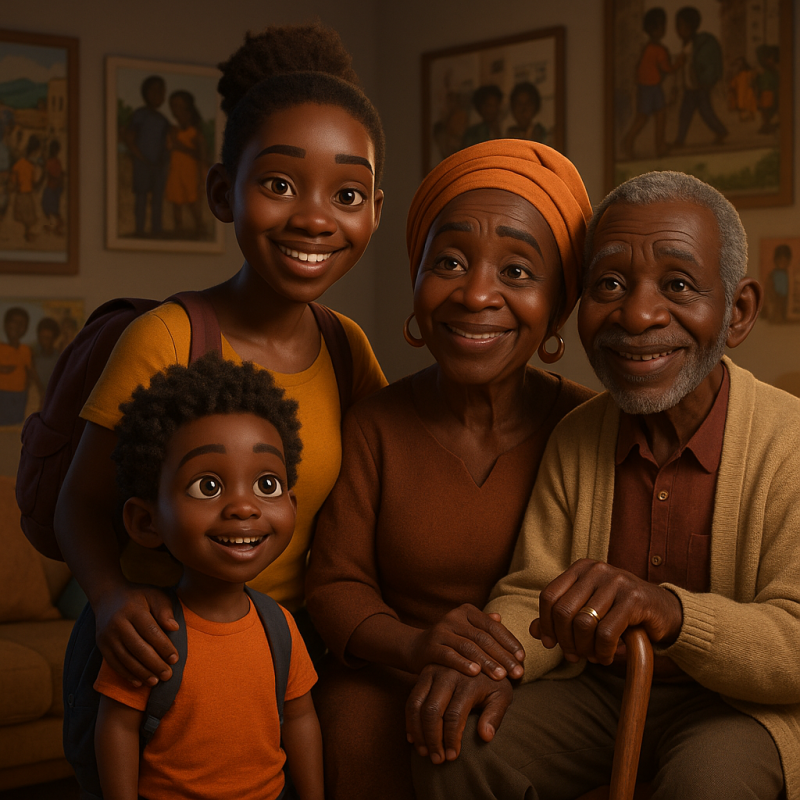
💫 Interested in The Hero’s Journey? Let’s Talk. 💫
Whether you're an individual navigating life’s challenges,
a community leader,
a service provider,
a school,
a faith group,
or an organisation working with diverse communities...
We’d love to connect with you.
At Blossom, we use The Hero’s Journey as a powerful tool for transformation—
Helping people of all ages and backgrounds see their own strength,
understand their path,
and move forward with support.
📚 Workshops
🎙️ Talks and community events
🤝 Partnership opportunities
💠 1:1 or group sessions
🌍 Tailored support for culturally diverse journeys
We’re here to inspire, equip, and walk with people
through the very real stages of grief, growth, and resilience.
✨ Let’s Collaborate. Let’s Empower. Let’s Blossom.
📩 Contact us today to explore how the Hero’s Journey could support your team, your service, your classroom—or your own life.
Together, we can recognise the hero in every story.
Including yours.